LIST OF DEMANDS FOR A NEGOTIATION
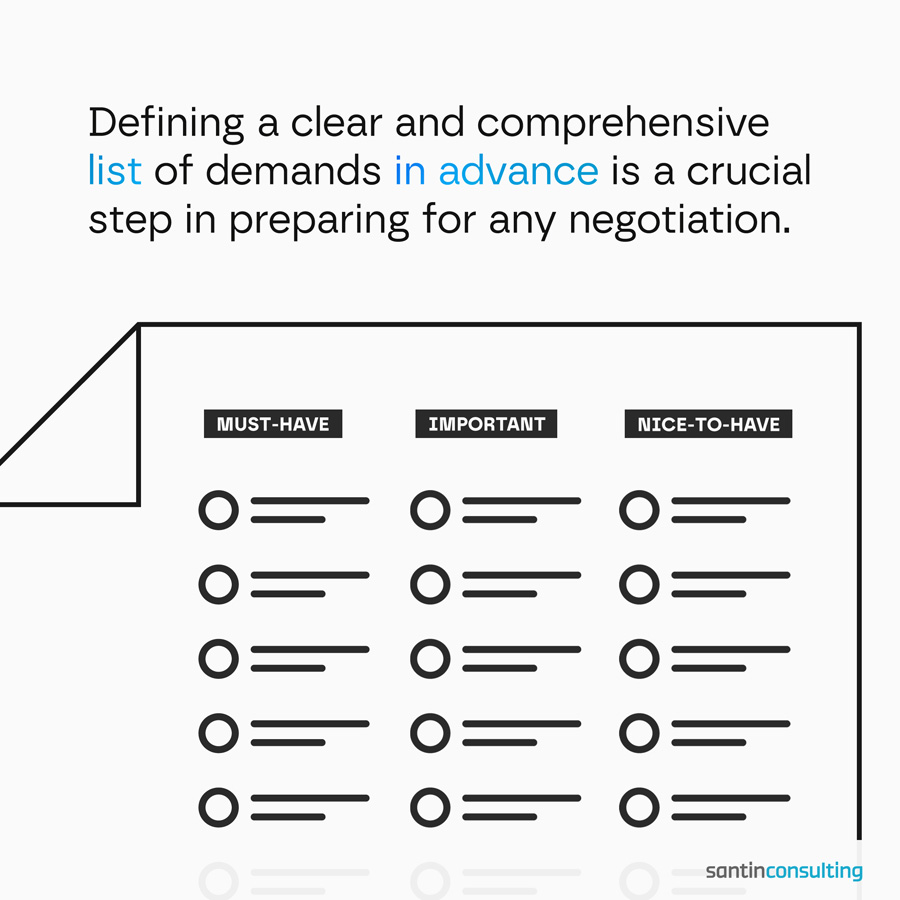


Defining a clear and comprehensive list of demands in advance is a crucial step in preparing for any negotiation.
The longer and more exhaustive this list is, the better. All topics should be included —without filtering at this stage— even if they seem small, obvious, neutral, or of limited interest. The objective is to capture everything that could potentially be discussed.
Commercial conditions are, of course, essential, but the list should also cover topics such as contractual terms, payment conditions, contract duration, shares, Incoterms, packaging, minimum order quantities (MOQs), investments, quality requirements, ongoing and upcoming projects, general cooperation, responsiveness and speed of answers, and any other relevant subjects. In short: everything that could matter.
Once the list is complete, the topics should be prioritized into three categories:
Must-Have (Non-Negotiable)
Important (Negotiable)
Nice-to-Have
After prioritization, arguments should be prepared for each major demand. This includes estimating the value created if the demand is achieved and the cost or impact if it is not.
It is also important to anticipate potential counter-demands and identify what can be conceded or traded, preferably in exchange for higher-value items.
This structured preparation significantly increases clarity, confidence, and effectiveness during the negotiation process.
Join our training sessions to gain deep knowledge about target calculation, expertise on supplier management and market analysis, a strategic mind set, well-trained abilities in cost analysis and negotiation skills. Additionally, please feel free to contact us directly for more information.
Comments are closed.