SETTING UP A NEGOTIATION TEAM – [PART I]


A negotiation should never be conducted alone. It is extremely difficult for one person to simultaneously discuss, plan, analyze, and actively listen. A team approach increases effectiveness, control, and strategic clarity.
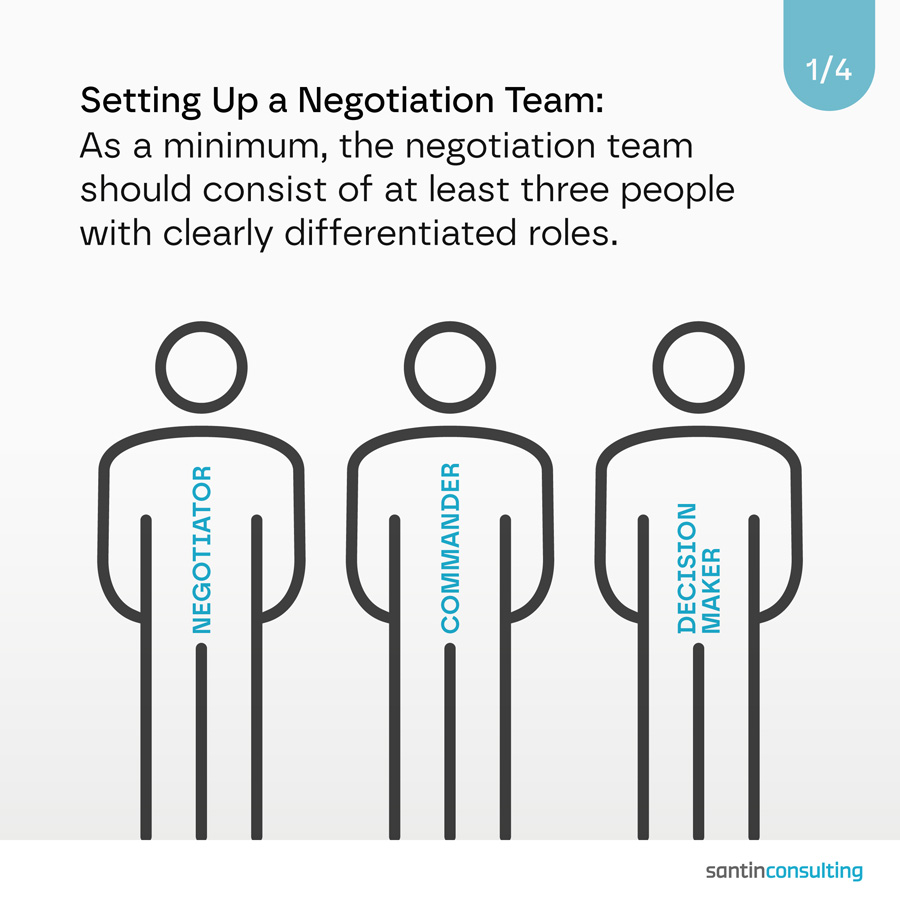
As a minimum, the negotiation team should consist of at least three people with clearly differentiated roles:
1) Negotiator
2) Commander
3) DecisionMaker
To be effective, the team must present one single face to the supplier. This requires full internal alignment before the negotiation and strict discipline to maintain each role throughout the entire process.
Clear role separation avoids confusion, strengthens negotiation performance, and prevents contradictory messages. When each team member focuses on their specific responsibility, the team is able to think strategically while remaining fully engaged in the discussion.
This role-based approach enables better listening, stronger strategic control, and negotiations conducted from a position of strength.
Join our Learning Sessions to gain deep knowledge about:
ADVANCE NEGOTIATION
This program is designed for senior purchasers involved in complex, high-stakes negotiations. It develops advanced negotiation skills, strategic thinking, and influence techniques to optimize outcomes in both bilateral and multilateral environments. Participants gain a structured, practical approach and immediately applicable tools to manage complex negotiations more effectively, increase their impact, and achieve superior results.
STRATEGIC PURCHASING
This training program is designed primarily for employees who are new to purchasing, but it is also highly recommended for operational purchasers who lack experience in a strategic approach. The program combines dynamic presentations, real-life examples from my professional experience, and interactive business cases that participants will actively work through. This ensures a practical, engaging, and results-oriented learning experience.
Comments are closed.