DEFINITION OF TARGETS FOR A NEGOTIATION
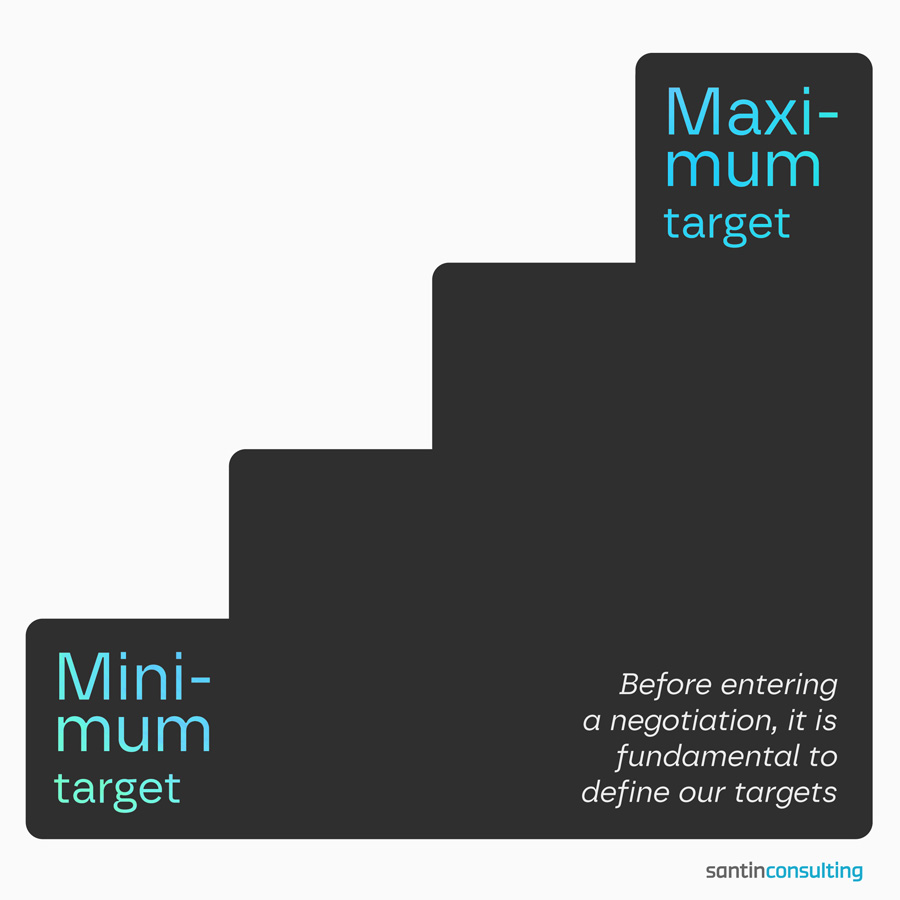



Before entering a negotiation, and as part of proper preparation, it is fundamental to define our targets.
Targets should be defined in the plural, because we need to set at least two: a maximum target and a minimum target.
The maximum target represents our real objective—what we ideally want to achieve. It is the best possible outcome we could expect from the negotiation. This target is ambitious and may not be fully realistic, but it should be achievable in principle. Throughout the negotiation, we should strive to conclude the agreement as close to this target as possible.
To clearly understand what is acceptable and what is not, what this “as close as possible” mean, we must also define a minimum target.
The minimum target is not our desired outcome; rather, it is the result that would still be acceptable in the worst-case scenario. We should always aim to achieve better, but this target represents the lowest point at which we can still agree to close the deal.
Defining the minimum target requires clear alignment with management in advance. This alignment ensures we know which results are acceptable and which are not. Below this minimum target, no deal should be concluded. Above it, we are authorized to finalize the agreement.
The greater the gap between the minimum and maximum targets, the higher the chances of reaching an agreement.
Join our Learning Sessions to gain deep knowledge about:
ADVANCE NEGOTIATION
This program is designed for senior purchasers involved in complex, high-stakes negotiations. It develops advanced negotiation skills, strategic thinking, and influence techniques to optimize outcomes in both bilateral and multilateral environments. Participants gain a structured, practical approach and immediately applicable tools to manage complex negotiations more effectively, increase their impact, and achieve superior results.
STRATEGIC PURCHASING
This training program is designed primarily for employees who are new to purchasing, but it is also highly recommended for operational purchasers who lack experience in a strategic approach. The program combines dynamic presentations, real-life examples from my professional experience, and interactive business cases that participants will actively work through. This ensures a practical, engaging, and results-oriented learning experience.
Comments are closed.