DEFINITION OF NEGOTIATION TARGETS


To be well prepared we need to know how to define the different targets needed during a negotiation.
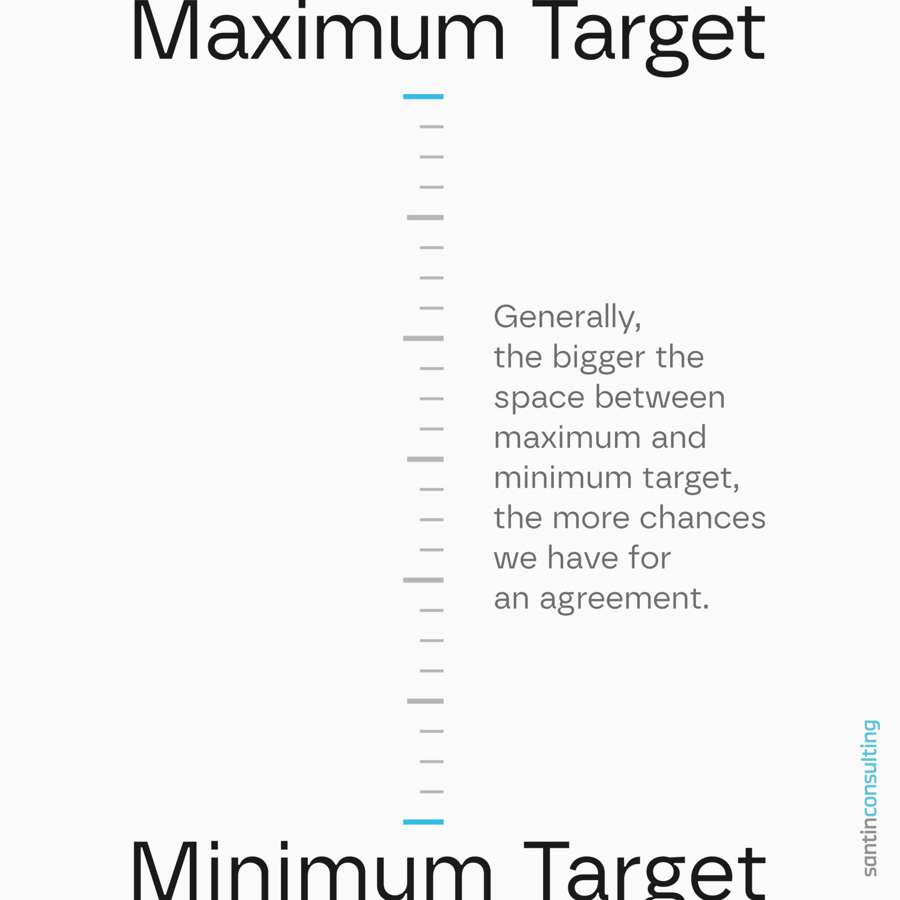
The first one is the maximum target, what we most wish to achieve. It can be also use as anchor and is very important to state this target clearly and quickly. The more we repeat this target the more we convince the other about our wishes.
My recommendation here is to use difficult but achievable target. In this case, if the supplier asks for the reason for this target, we have a strong argument for it.
The second target is the minimum target, meaning we will never agree to anything below this target. This is internally aligned and we do not inform the supplier about it.
Now that the frame is defined, we need to play as close as possible to our maximum target.
Depending on different cultures we see different ways to maneuver during negotiation, but generally the bigger the space between maximum and minimum target, the more chances we have for an agreement.
Join our Learning Sessions to gain deep knowledge about:
ADVANCE NEGOTIATION
This program is designed for senior purchasers involved in complex, high-stakes negotiations. It develops advanced negotiation skills, strategic thinking, and influence techniques to optimize outcomes in both bilateral and multilateral environments. Participants gain a structured, practical approach and immediately applicable tools to manage complex negotiations more effectively, increase their impact, and achieve superior results.
STRATEGIC PURCHASING
This training program is designed primarily for employees who are new to purchasing, but it is also highly recommended for operational purchasers who lack experience in a strategic approach. The program combines dynamic presentations, real-life examples from my professional experience, and interactive business cases that participants will actively work through. This ensures a practical, engaging, and results-oriented learning experience.
Comments are closed.