THE POWER OF SILENCE IN NEGOTIATION
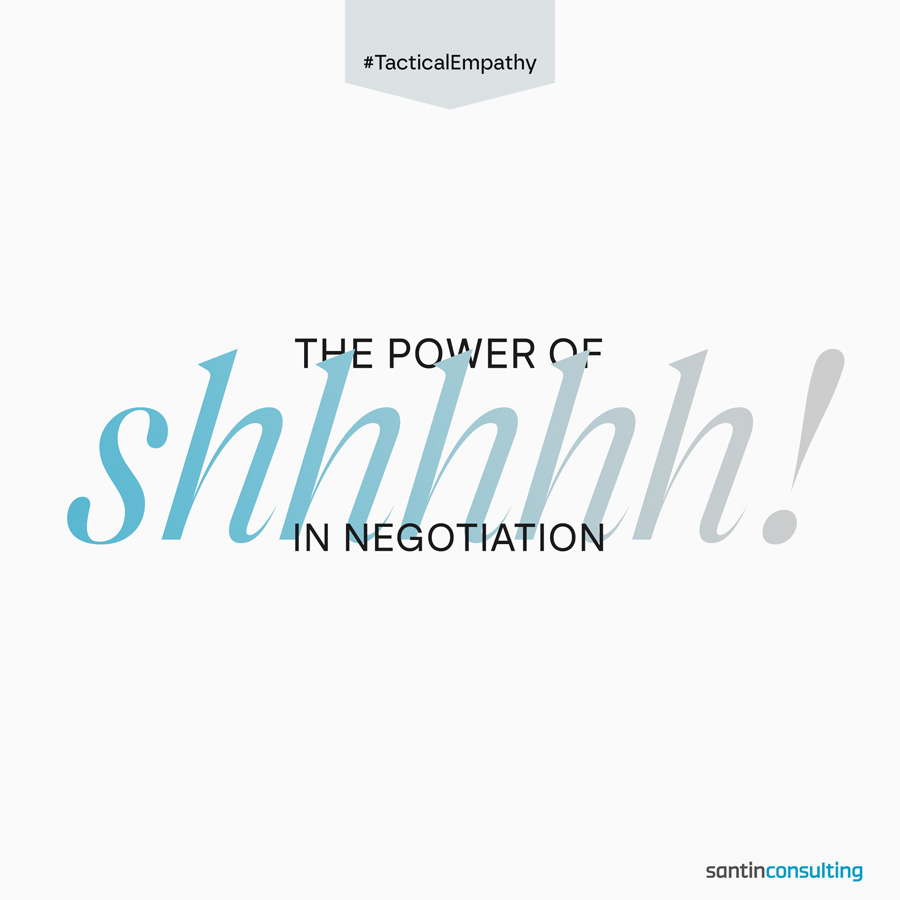


Tools commonly used in tactical empathy include: The Power of Silence in Negotiation.
People feel uncomfortable with silence.
And that is exactly why silence is such a powerful strategic tool in negotiation.
Silence should not be seen as passive behavior. When used intentionally, it becomes a powerful tactic that can create pressure, reveal information, and shift control of the conversation.
In many cases, silence can increase leverage, improve terms, and reveal valuable information without confrontation. Sometimes it even leads the counterpart to start negotiating with themselves.
But it must always be used calmly, deliberately, and with control.
Why silence is so powerful:
Most people instinctively try to fill silence.
When we stay quiet, the other party often:
Silence communicates confidence.
Used correctly, silence is not aggressive—it signals calm confidence.
When you remain silent after an offer, it can communicate messages such as:
Silence encourages the other party to talk.
The person who talks more usually reveals more information—and more information means more leverage.
By allowing the other side to speak, you may uncover:
The technique to use it is simple: Pause, look thoughtful and say nothing. After that just let the silence work.
Silence is also particularly effective when combined with other negotiation tools such as mirroring, labeling, and open-ended questions. Used correctly, silence can be one of the most powerful tools in a negotiator’s toolkit.
Join our Learning Sessions to gain deep knowledge about:
ADVANCE NEGOTIATION
This program is designed for senior purchasers involved in complex, high-stakes negotiations. It develops advanced negotiation skills, strategic thinking, and influence techniques to optimize outcomes in both bilateral and multilateral environments. Participants gain a structured, practical approach and immediately applicable tools to manage complex negotiations more effectively, increase their impact, and achieve superior results.
STRATEGIC PURCHASING
This training program is designed primarily for employees who are new to purchasing, but it is also highly recommended for operational purchasers who lack experience in a strategic approach. The program combines dynamic presentations, real-life examples from my professional experience, and interactive business cases that participants will actively work through. This ensures a practical, engaging, and results-oriented learning experience.
Comments are closed.