CARROTS AND STICKS FOR NEGOTIATION
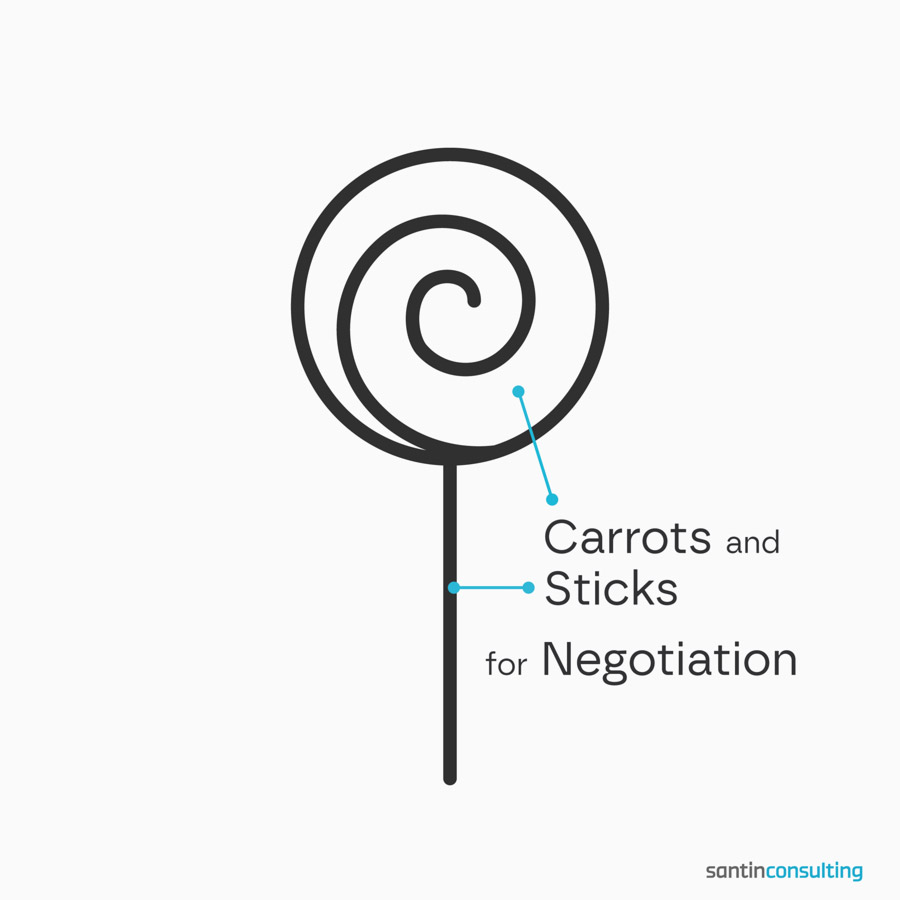


Effective negotiations rely on a balanced use of carrots (incentives) and sticks (pressure or consequences).
Both should be prepared and clearly defined in advance, applied deliberately, and always aligned with the overall negotiation strategy. Proper preparation of carrots and sticks increases control, discipline, and effectiveness during the negotiation process.
Carrots are positive levers used to encourage agreement, cooperation, or faster decision-making. They create value for the counterpart and help move negotiations forward. Typical carrots include increased volumes, longer contract durations, faster payment terms, or reduced complexity. A key rule is to never offer a carrot for free—it should always be exchanged for a concession.
Sticks represent credible alternatives or consequences if an agreement cannot be reached. They reinforce seriousness and protect your negotiation position. Typical sticks include the threat of volume reductions due to alternative suppliers or the use of short-term contracts. When introducing sticks into a discussion, they must be realistic and credible to be effective.
A successful negotiation balances incentives and pressure appropriately—starting with a cooperative approach and increasing pressure only if incentives fail.
Join our training sessions to gain deep knowledge about target calculation, expertise on supplier management and market analysis, a strategic mind set, well-trained abilities in cost analysis and negotiation skills. Additionally, please feel free to contact us directly for more information.
Comments are closed.